



Micha Grundman
Executive Vice President

This short-duration structure materially limits sensitivity to interest rate changes and reduces price volatility. As individual Treasury bills mature, proceeds are reinvested into newly issued bills at prevailing market yields. This rolling reinvestment process incorporates changes in interest rates and inflation expectations gradually through market pricing, without requiring discretionary adjustments, algorithmic controls, or fixed pegs. A permanent reserve buffer is maintained to further absorb short-term liquidity shocks and dampen residual volatility, reinforcing a stable, peg-like value profile.
Each DIPC token is fully backed by a laddered portfolio of short-term U.S. Treasury bills. These securities are direct obligations of the U.S. government and are among the most liquid instruments in global capital markets. The portfolio is constructed across multiple near-term maturities so that a portion of the holdings is continuously approaching maturity and being redeemed at par.
DIPC does not maintain a nominal fiat peg. Instead, the value of each token reflects the mark-to-market net asset value of the underlying Treasury bill portfolio. Mark-to-market updates are applied at a frequency aligned with the duration and maturity profile of the portfolio, suppressing high-frequency valuation noise. Because the backing assets have short maturities, day-to-day price movements are naturally dampened, producing a stable value profile while remaining fully market-based.
DIPC does not pay interest, distribute yield, or adjust token balances through rebasing. Token quantities held by users remain constant. Yield generated by the Treasury bills accrues within the portfolio and is reflected directly in the token’s price over time. A token introduced at a reference value of one dollar may therefore appreciate gradually as underlying yield is earned and reinvested, without any change in the number of tokens held.
This structure aligns token holders directly with the economic performance of the backing assets while preserving compatibility with standard blockchain infrastructure. Value changes are expressed through price rather than balance adjustments, enabling straightforward integration with wallets, exchanges, custody systems, and on-chain applications.
The result is a digitally transferable instrument whose stability arises from short-duration sovereign collateral, synchronized valuation mechanics, and prudent reserve buffering, and whose value progression reflects accumulated yield rather than speculative price dynamics.
DIPC does not maintain a nominal fiat peg. Instead, the value of each token reflects the mark-to-market net asset value of the underlying Treasury bill portfolio. Mark-to-market updates are applied at a frequency aligned with the duration and maturity profile of the portfolio, suppressing high-frequency valuation noise. Because the backing assets have short maturities, day-to-day price movements are naturally dampened, producing a stable value profile while remaining fully market-based.
DIPC does not pay interest, distribute yield, or adjust token balances through rebasing. Token quantities held by users remain constant. Yield generated by the Treasury bills accrues within the portfolio and is reflected directly in the token’s price over time. A token introduced at a reference value of one dollar may therefore appreciate gradually as underlying yield is earned and reinvested, without any change in the number of tokens held.
This structure aligns token holders directly with the economic performance of the backing assets while preserving compatibility with standard blockchain infrastructure. Value changes are expressed through price rather than balance adjustments, enabling straightforward integration with wallets, exchanges, custody systems, and on-chain applications.
The result is a digitally transferable instrument whose stability arises from short-duration sovereign collateral, synchronized valuation mechanics, and prudent reserve buffering, and whose value progression reflects accumulated yield rather than speculative price dynamics.
The DIPC architecture is the subject of a pending U.S. provisional patent application (No. 63/948,944).
By reflecting yield through price appreciation rather than periodic interest payments DIPC may offer meaningful structural tax advantages in many jurisdictions. Traditional interest-bearing products often trigger taxable income upon receipt even when the investor does not sell the asset or realize cash, creating tax friction without liquidity.
In contrast DIPC's value accretion model typically results in taxation only when tokens are sold or redeemed. This may allow for tax deferral and in some cases treatment under capital gains regimes rather than ordinary income frameworks, enhancing long term compounding efficiency.
This structure aligns with long standing financial instruments designed for efficient compounding though actual tax treatment depends on individual circumstances and local regulations. Users are encouraged to consult their own tax advisors.
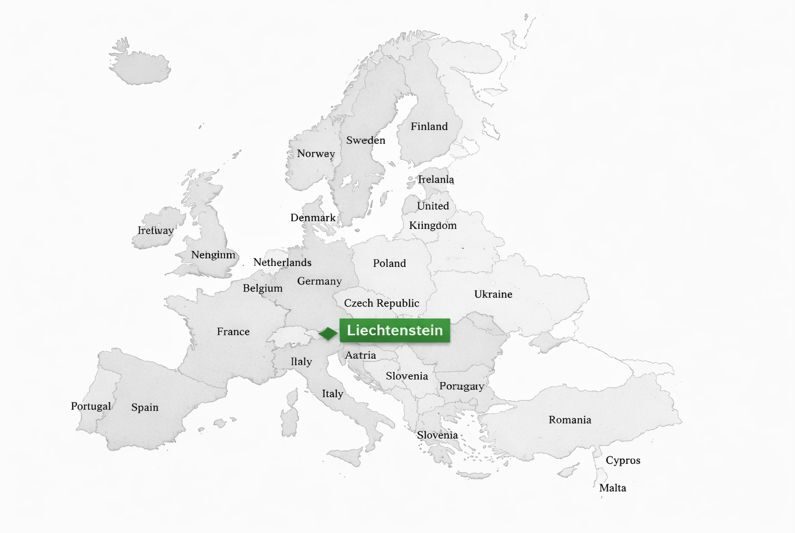
DIPC is issued as a digital Exchange Traded Commodity pursuant to the Liechtenstein Blockchain Act (Token and TT Service Provider Act), TVTG. It represents a digital bearer instrument whose legal ownership is established through control of the corresponding private key in accordance with applicable law.
This structure allows DIPC to operate with full regulatory clarity at issuance and redemption while remaining freely transferable on chain. Once approved the product benefits from EU single market passporting enabling lawful marketing and distribution across the entire European Economic Area. Rather than avoiding regulation DIPC is built within it turning compliance into a foundation for scale.
The U.S. Treasury bills backing DIPC are held in custody at Bank of New York Mellon pursuant to BNY Mellon’s standard institutional custodian agreement. As an independent, regulated financial institution, BNY Mellon provides safekeeping, settlement, and record-keeping services for the underlying securities, ensuring that all Treasury assets are maintained within a traditional banking and custody framework. The custodian operates separately from the issuer and does not engage in token issuance, pricing, or portfolio management decisions.
All Treasury securities are held in segregated custody accounts for the exclusive benefit of DIPC holders and are not commingled with the assets of the issuer, the custodian, or any other third party. Under the Classic Custodian Agreement, the custodian’s role is limited to asset safekeeping, transaction processing, and reporting, providing a clear separation of responsibilities and reducing operational and counterparty risk. This structure aligns DIPC’s reserve custody with established institutional standards used by asset managers, funds, and other regulated financial products, reinforcing transparency, asset protection, and trust.
DIPC is intended for individuals and institutions seeking a stable liquid instrument whose value responds to prevailing economic conditions. It may be used as a payment medium a treasury management solution or as a base asset for transitioning capital out of higher risk investments, without sacrificing liquidity or control.
By combining daily liquidity market driven value adjustment and a clearly defined legal framework DIPC offers exposure to short term sovereign yields while preserving transferability accessibility and user control. DIPC is not a promise of returns nor a speculative asset. It is a carefully structured digital instrument designed to preserve purchasing power through transparency discipline and alignment with global capital markets, addressing a core weakness in modern money design.

Executive Vice President
Micha Grundman was the former Vice-President, Strategic Ventures at Amaya Inc. (now The Stars Group), a Toronto–Montreal based interactive entertainment and online gaming company known for iconic brands such as PokerStars and Full Tilt Poker. In his role, he focuses on identifying and executing strategic initiatives and business opportunities across the company’s core e-commerce and gaming verticals, contributing to growth during a transformative era for the organization. Under its leadership team, Amaya completed several landmark corporate transactions — including the $4.9 billion acquisition of PokerStars and Full Tilt Poker that significantly expanded the company’s global footprint as a publicly-listed gaming entity.

CFO
Imran Pervaiz is a strategic financial leader with a distinguished track record of driving growth and operational excellence. Holding a Master’s in Finance from Birmingham City University. He possesses a unique blend of deep financial acumen and modern technical insight. With a proven history at esteemed firms like Wavell DCC, Imran excels at architecting financial strategies, optimizing business operations, and leveraging data-driven analysis to overcome complex challenges. His expertise in strategic planning, risk assessment, and corporate development makes him an invaluable asset in guiding the company toward its long-term objectives and achieving sustained success.

Treasurer
Abdi Abdalla is a seasoned technology executive with over 30 years of experience in technical and leadership roles. Instrumental in the creation and growth of Systemcorp ALG, leading to its successful acquisition by IBM. He currently leads a team at IBM in an unrelated technology field.

President CEO
Matthew Ronald is a Highly creative, results-oriented professional with solid experience in marketing, industry analysis, and project management. Mathew is an effective leader with a strong organizational, analytical, communication and interpersonal skills. Mathew holds an MBA in Global Strategy and Leadership from McGill and Fudan-MIT Universities. He has worked in Canada, China, the United Arab Emirates and the USA and has successfully managed projects and major commercial initiatives in France, Germany, India, Serbia, Seychelles, and Switzerland. He previously worked with the Government of Canada, as a senior officer, Mathew led a provincial energy efficiency project in British Columbia encompassing multiple Federal Canadian departments and hundreds of government properties responsible for designing, promoting and implementing a province-wide series of 2020 Energy Performance Contracts (EPCs).

Director
Sidney Elhadad is a highly respected professional with an extensive career spanning 30 years in the investment community. His expertise in key areas such as financial management, operational leadership, and corporate strategy has positioned him as a trusted advisor and leader in both private and public sector enterprises.
As a member of the Board of Directors, Sidney will play a pivotal role in guiding WorldOne’s strategic direction, ensuring robust governance, and supporting the company’s mission. His unique perspective and diverse experience will further enhance the company’s efforts to drive innovation and sustainable growth.

Chairman
Jaime Benchimol, a distinguished technology entrepreneur is currently a managing Partner at Benchimol Ungerman Venture Partners. He brings decades of entrepreneurial, financial, and strategic expertise to guide the company’s vision and growth. With a background informatics, Benchimol has been instrumental in the growth and success of numerous companies including as an executive at IBM Rational, as a president and founder at Systemcorp ALG and Ogivar Technologies Inc.